Resources
Research, thinking, and resources
The evidence behind the approach, our latest thinking, and practical resources for schools putting MARIO into practice.
Research Library
The research behind the approach
MARIO is built on decades of evidence about what actually helps students. Our working library spans the fields that shape the approach.
Relationships & belonging
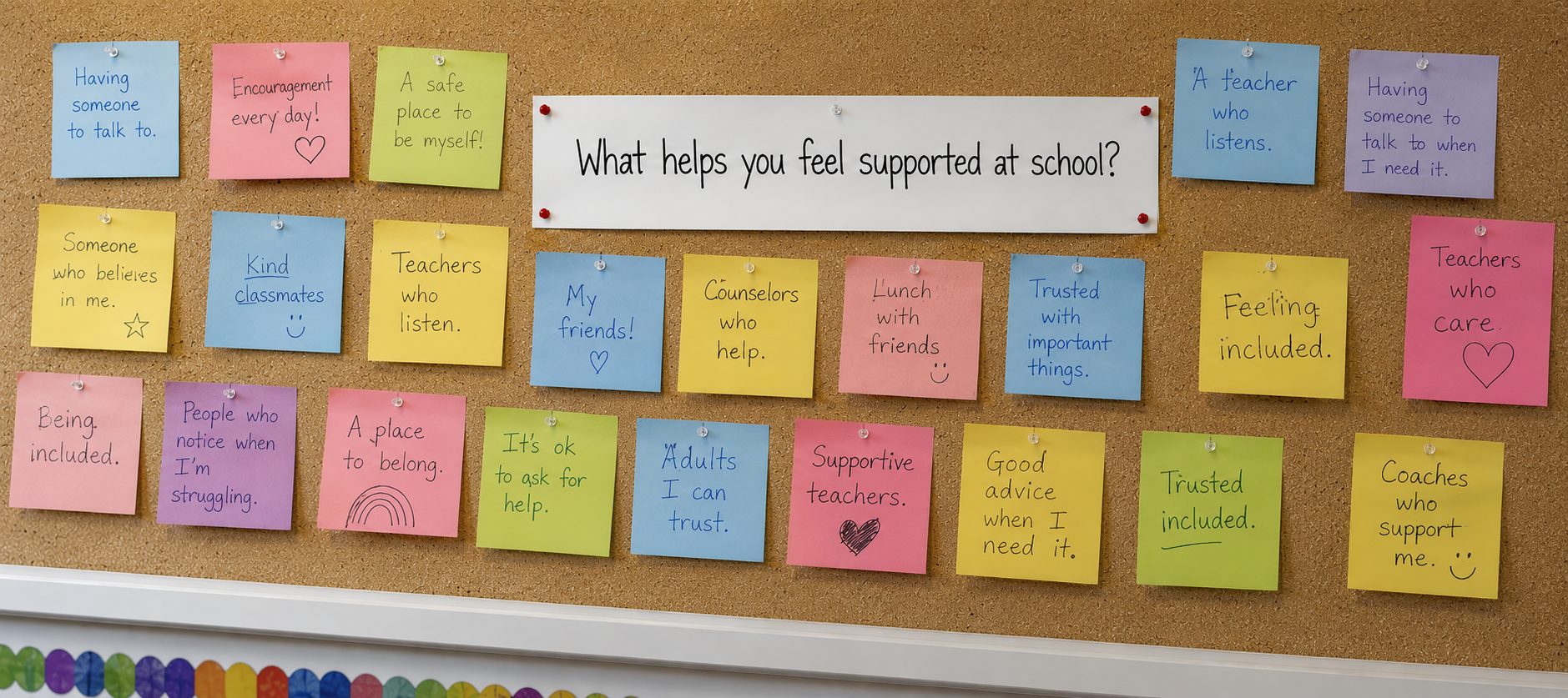
Why strong teacher–student relationships are among the most powerful levers for learning and wellbeing.
Student voice & self-regulation
How giving students a regular, structured voice builds self-awareness, ownership, and executive-function skills.
Structured 1:1 conversations
The evidence base for short, repeatable conversations as a vehicle for support and growth.
Wellbeing & SEL
Frameworks (including CASEL) for understanding and supporting whole-child wellbeing.
UDL & inclusive practice
Universal Design for Learning and inclusive pedagogy, in partnership with Novak Education.
MTSS & implementation science
Multi-tiered systems of support, and what makes school initiatives actually stick.
Request the MARIO Reading List
Get a curated snapshot of the research that informs MARIO’s professional learning and student support approach. This is a public snapshot of our broader research canon, which we update regularly as new evidence emerges.
Your reading list is ready
Scan the QR code with your phone to download the reading list, or use the button below.
Download the reading listThought Leadership
Ideas and reflections from the MARIO team
Practical thinking on student wellbeing, safety, and coordinated support, from Philip, Graeme, Taryn, and the wider team.
“From the first classroom computers to today’s AI tools, the constant in great education has always been the power of relationships.”
“My decision to become a teacher came with a promise to ensure no student felt as invisible as I once had.”
“When students are supported to understand themselves, advocate for their needs, and take meaningful next steps, inclusion becomes something they can actively shape.”
“Students are more likely to feel safe, confident, and ready to learn when strong relationships with educators are intentionally built into the school day.”
“Autonomy-supportive teaching and positive teacher-student relationships can act as protective factors for student mental health.”
“Students notice not only what adults say, but how they say it; tone can shape whether students feel safe enough to engage and self-disclose.”
“Student wellbeing should not sit beside learning; it should be woven into the everyday practices of teaching, support, and school life.”
“Tiered systems give schools a structure for using data, clarifying roles, and connecting students to the right level of support.”
“Schools need practical, evidence-informed systems for identifying student mental health needs and connecting students to effective support.”
“Progress monitoring only changes outcomes when schools have the systems, routines, and oversight to make data collection actionable.”
“When student wellbeing is everyone’s responsibility, schools still need clear systems, shared language, and training so responsibility becomes action.”
“Direct engagement with learners helps adults identify priorities, personalize goals, and design support with students rather than merely for them.”
“Students with disabilities are more likely to self-advocate when they feel known, respected, and supported through trusted relationships.”
“AI can help personalize support, but schools still need human judgment, ethical safeguards, and trained adults around the tool.”
“Professional learning becomes more powerful when it is school-based, trust-rich, and connected to the real work of improving student support.”
“Educators need practical learning science they can actually apply in the moments where student support decisions are made.”
“The learning environment is not background context; it actively shapes whether students can focus, participate, and thrive.”
“Self-assessment works best when students understand its purpose and are supported to use reflection as a learning tool.”
“Student self-perception is valuable data, but it becomes more powerful when paired with adult guidance and structured reflection.”
“Motivation is not only a student trait; it is shaped by the learning conditions and adult interactions around the student.”
“Students are more likely to engage when tasks support autonomy, purpose, and a sense of competence.”
“Digital learning environments require explicit teaching of self-regulation, not just access to devices and platforms.”
“Inclusive education depends on shared understanding across leaders, general educators, and specialists, not isolated effort.”
“Co-teaching has real potential, but without training, planning time, and feedback, inclusive practice often fails to deliver on its promise.”
“Schools can support emotional health across the full intervention spectrum, from prevention to targeted support.”
“School-wide efforts to reduce bullying can also reduce attendance problems, especially for vulnerable students.”
“Safeguarding systems must pay particular attention to students with disabilities, who can be more vulnerable to harm inside school communities.”
“Effective school-based support requires shared trust, transparent communication, and alignment between the child, family, and school team.”
Newsletter
The latest from MARIO
We share practical thinking on student wellbeing, safety, and support, and what schools are learning along the way, through our LinkedIn newsletter.
“Know every student. Turn insight into action. Connect support systems.”
Want to learn more about MARIO?
Let’s explore how MARIO could help your school strengthen wellbeing, safety, and coordinated student support.
Book a ConversationSchool enquiries, product & partnership questions
MARIO is not an emergency or crisis service, and this chat isn’t monitored 24/7. If you’re a student who needs immediate wellbeing or safety support, please talk to a trusted adult at school, a parent or guardian, or local emergency services.
How can we help?